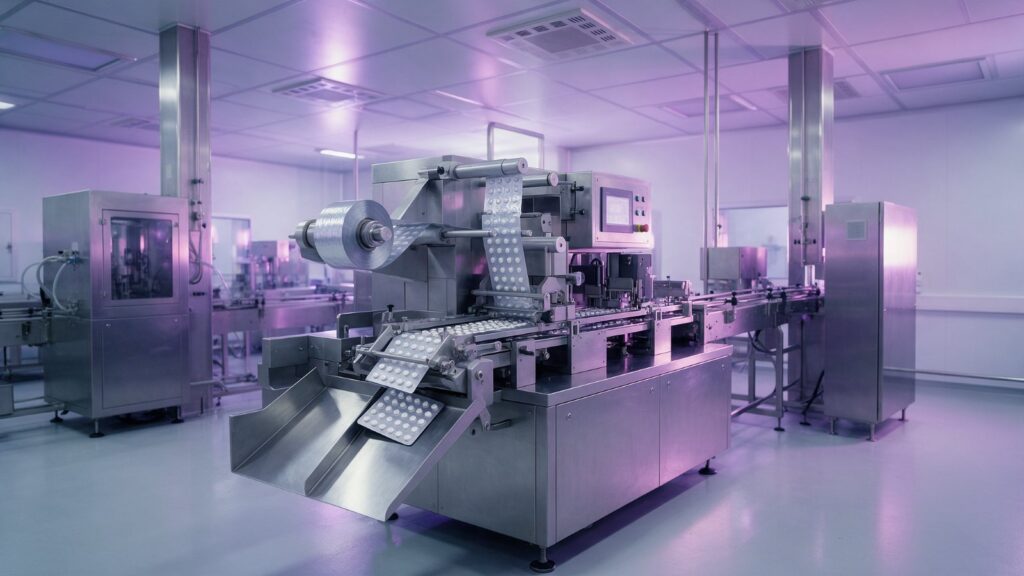
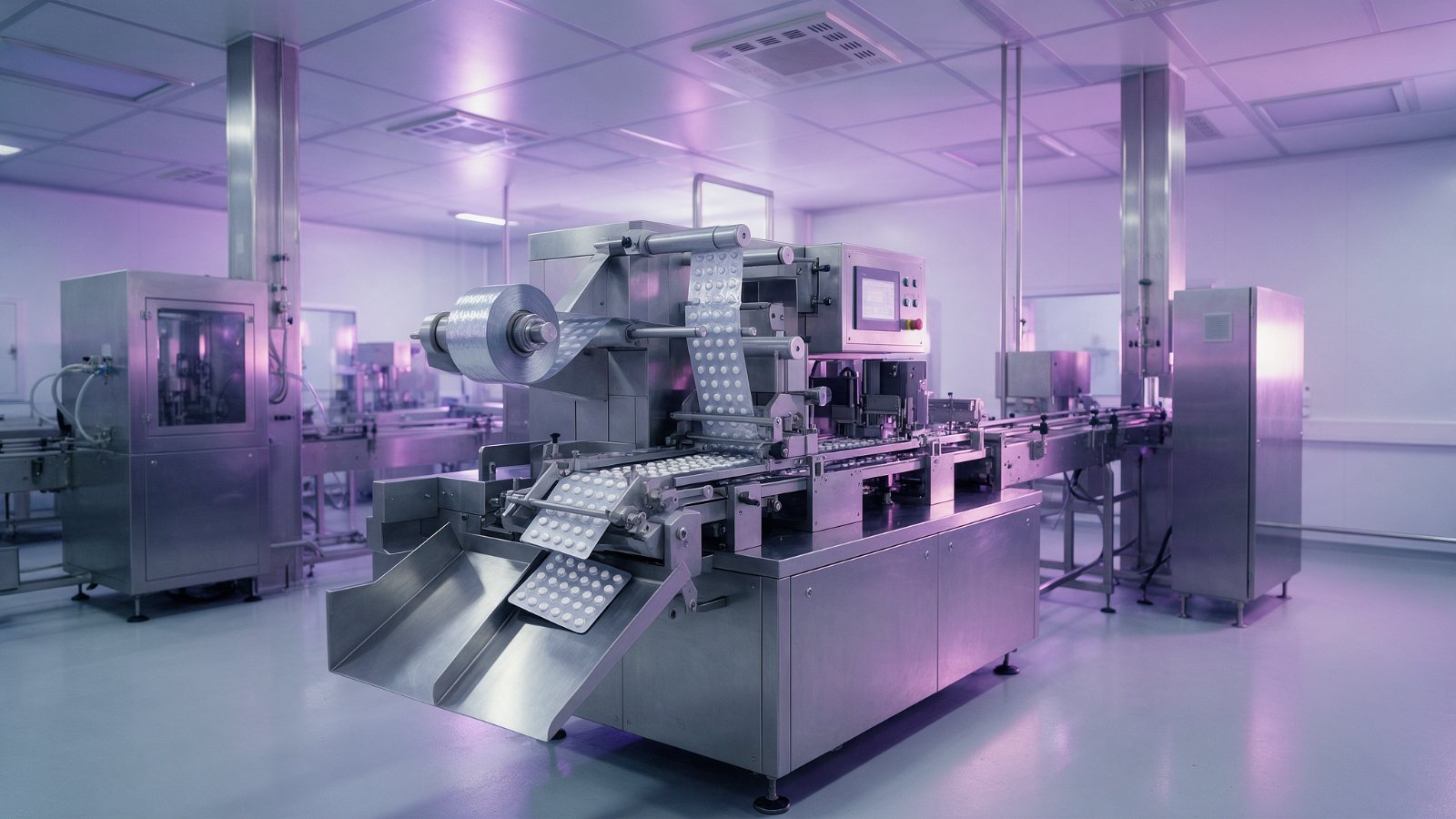
Sooner or later every growing pharmaceutical company faces the same question: keep production outside, or build it in. The answer is usually presented as a cost comparison, which is the least useful way to approach it. Cost per unit is the output of the decision, not the input.
What follows is the way the question is normally broken down in practice.
Volume and its stability
In-house production converts variable cost into fixed cost. That is an advantage only when volumes are high enough and stable enough to absorb it. A line running at a fraction of its capacity produces expensive units regardless of how efficient the equipment is.
The useful question is therefore not the current volume but the volume the company can commit to for the depreciation period of the investment. Where demand depends on tenders, on a single market or on a product approaching patent expiry, contract manufacturing keeps the risk outside the balance sheet.
Technology and how often it changes
Some dosage forms require dedicated facilities: sterile injectables, cytotoxics, hormones, high-potency compounds. The investment is not only the equipment but the containment, the utilities, the qualification and the staff to run it under inspection.
If a company needs that technology for a single product, a contract manufacturer with an already qualified line is almost always the better answer. If the technology is central to a portfolio expected to grow, internalising it protects know-how and shortens development cycles.
Time and regulatory consequences
A new production site is not operational when construction ends. Qualification, validation, authority inspection and the registration variations required to add a manufacturing site to existing dossiers all take time, and that time is rarely in the first version of the business plan.
Contract manufacturing at an already inspected site compresses this, which is why it remains the default when speed to market matters more than long-term margin.
What each option really costs
- In-house: facility, equipment, utilities, qualification, validation, quality staff, maintenance, energy, and the variations needed to register the site in each market.
- Contract manufacturing: transfer price, technology transfer, audits of the partner, batch release, and the cost of managing a relationship that carries part of the supply risk.
- Hybrid: internal production for the core portfolio, external capacity for peaks, new dosage forms and markets with specific requirements.
The hybrid model is the most common outcome among mid-sized companies, and the one least often planned deliberately from the start.
Two costs that are usually underestimated
The first is energy. Cleanrooms, HVAC, compressed air, steam and purified water run continuously, and for many facilities utilities represent one of the largest operating items. Any calculation that compares an internal unit cost with a transfer price without including utilities is incomplete. This is precisely what an energy diagnostic is designed to quantify, and where the gap between a plant’s theoretical and actual consumption usually appears.
The second is the cost of managing an external partner properly: audits, quality agreements, forecasting, batch release, deviation handling. Contract manufacturing is not the absence of a quality organisation. It is a different quality organisation.
A practical way to decide
Take the three products that matter most, project volumes over five years under a conservative scenario, and calculate the full cost of both options including energy and quality management. Then ask which option the company can reverse if the projection turns out to be wrong. Reversibility often decides the question more honestly than the spreadsheet.
Support on both sides of the decision
Synergy Swiss Business Development connects companies with a network of specialised contract manufacturers, while Synergy Swiss Engineering handles user requirements, conceptual and basic design, construction and revamping of technological plants for the chemical-pharmaceutical, biotech and healthcare industry.
For companies that need finished products or active ingredients while the decision is being made, the available categories are listed under products, and supply questions are answered in the FAQ section.
Related reading
- Energy efficiency in pharmaceutical manufacturing — where a GMP plant really loses energy, and how to cut it without touching validated parameters
- How to qualify an API supplier — the documents a serious supplier can produce on request, and the checks that matter beyond the paperwork
- Why source pharmaceutical products through Switzerland — what a Swiss intermediary adds between a manufacturing site and a destination market
Weighing an internal line against an external partner?